Un diplôme, c'est un départ, franchement, pas une arrivée. Ton diplôme t'a donné les fondations—technique solide, histoire de l'art, composition, théorie de la couleur, comment travailler les matériaux avec respect. Mais il ne t'a pas montré ce qui compte réellement pour vivre de l'art : comment vendre une pièce, comment négocier avec une galerie qui te respecte, comment structurer une activité professionnelle, comment écrire des textes qui ouvrent des portes, comment tarifer ton travail intelligemment, comment archiver et documenter, comment être visible et pertinent en ligne. Ce qui transforme un talent brut en carrière professionnelle durable et authentique.
Et même ta créativité pure, même ce que tu maîtrisais en quatrième année ? C'est déjà derrière toi. Les matériaux évoluent. Des techniques nouvelles apparaissent. De nouveaux médiums émergent, des logiciels, de l'IA, de nouveaux matériaux biologiques. De nouvelles façons de montrer et de documenter ton travail. L'art bouge plus vite qu'avant, le contexte se transforme constamment. Rester immobile, c'est rester derrière. Pas dans dix ans. Maintenant. Cette année. Ce mois.
Trois types de connaissances dont tu as absolument besoin
Premièrement : la technique. L'artisanat, le savoir-faire. Nouvelles techniques, nouveaux matériaux, nouveaux médiums. Même après vingt ou trente ans de peinture à l'huile, même si tu crois maîtriser chaque variable, il y a toujours quelque chose d'inconnu. Un pigment nouveau qui vient d'arriver. Un apprêt formulé différemment. Un outil que tu n'as jamais essayé. La technique n'a vraiment pas de fin. C'est un exploration sans fin.
Deuxièmement : le contexte. L'histoire de l'art ne s'arrête pas en 1960. Chaque année arrive avec de nouvelles recherches, de nouvelles lectures importantes, de nouvelles découvertes qui changent la conversation. L'art contemporain se transforme avec la technologie, l'écologie, les mouvements sociaux. Un artiste qui ignore le contexte large répète ce que les autres ont déjà fait il y a cinq ans. Tu ne crées pas en vide. Tu crées dans une conversation.
Troisièmement : le business. Tarification intelligente. Négociation respectueuse. Marketing authentique. Finances et comptabilité de base. Notions juridiques sur ton métier, tes droits, tes obligations. Gestion du temps et des priorités. La plupart des artistes ignorent complètement ce domaine, puis s'étonnent que leur carrière stagne, que les revenus ne montent pas. Ton travail est magnifique, tes pièces sont fortes, mais tu vends rien. Pourquoi ? Parce qu'on t'a jamais appris. Tu n'as pas besoin de devenir entrepreneur ni ultra-commercial. Mais les bases ? Essentielles pour vivre dignement de l'art.
Où apprendre après l'université
Les résidences. C'est le format d'apprentissage le plus puissant et transformatif. Tu travailles dans un nouvel endroit, avec de nouvelles personnes, une nouvelle énergie, une nouvelle communauté. Ce n'est jamais juste technique ou méthodologique. C'est une nouvelle façon de penser, de voir, d'approcher ton sujet. Quand tu quittes l'habituel, les routines craquent. Tu vois ta pratique autrement. Chaque résidence change quelque chose, même subtilement. Une nouvelle technique maîtrisée. Un nouveau thème qui t'obsède. Un nouveau matériau découvert. Ou juste une nouvelle façon de voir ce que tu fais depuis des années. Cherche via TransArtists, ResArtis, les réseaux institutionnels français. Une résidence bonne ne coûte généralement rien ou peu. C'est juste du temps, le tien, investi en toi. Et le temps investi en développement rapporte plusieurs fois.
Les master classes et ateliers. D'autres artistes, pas seulement les « stars » ou les figures consacrées. Parfois la leçon la plus pertinente vient d'un pair qui a maîtrisé quelque chose que tu n'as jamais osé essayer. Un atelier de deux jours sur la monotype peut ouvrir une direction entière. Sois ouvert à apprendre de n'importe qui. Chaque artiste a développé quelque chose d'unique, une solution à un blocage ou une façon de travailler qui surprendra. Un procédé que tu n'aurais jamais osé explorer seul. C'est de l'or pratique. N'aie pas honte d'apprendre de quelqu'un de moins connu ou de moins médiatisé. Souvent, les meilleures leçons viennent des sources inattendues, des artistes modestes qui font un travail extraordinaire.
Les cours en ligne. De la technique au marketing, du code à la théorie. Skillshare, Domestika, Udemy, Coursera, YouTube, les universités qui ouvrent leurs contenus. Du matériel infini, de qualité variable mais souvent très bon. À ton rythme. Sans te déplacer. Sans horaires fixes. Le problème ? Tu dois être discipliné. Personne ne te contrôle. Pas de professeur pour te forcer à continuer quand tu abandonnes.
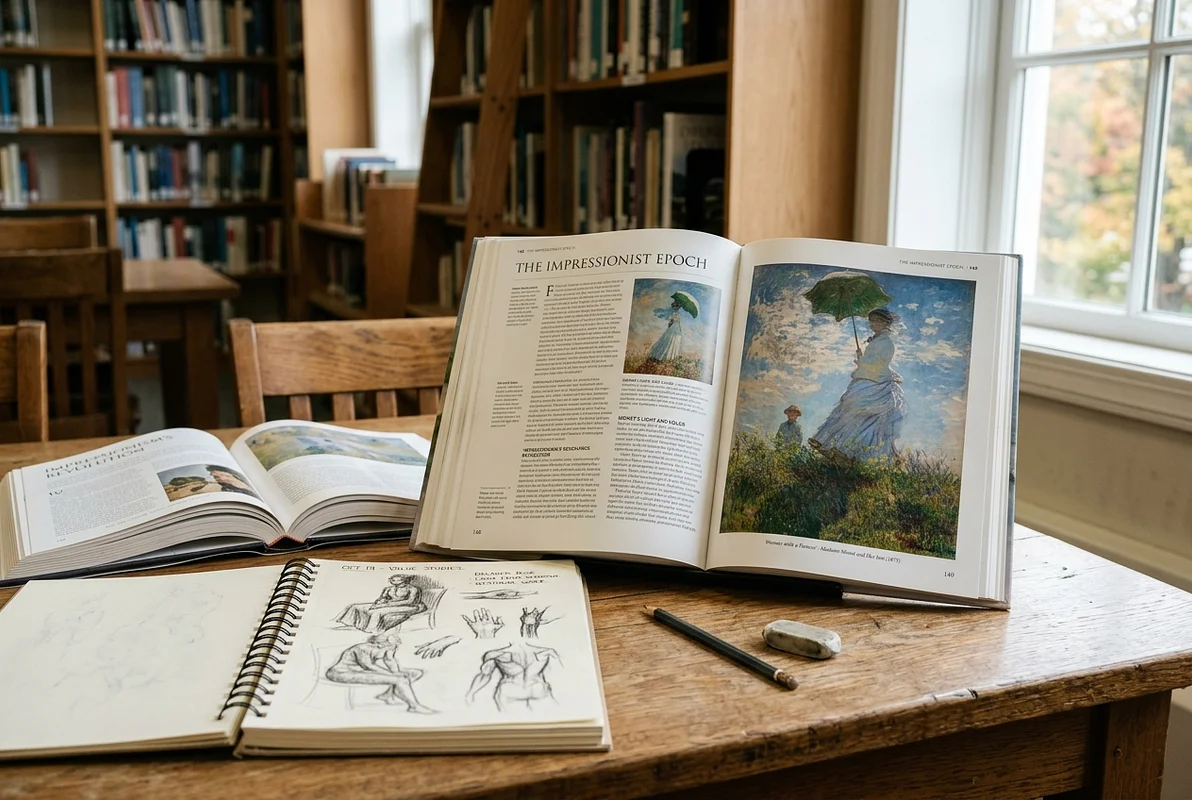
Les livres et catalogues d'exposition. Jamais vraiment obsolètes. Pas seulement l'art. Commerce, marketing, psychologie, philosophie, histoire, écologie. Un artiste qui lit largement pense mieux, crée plus profondément. Un livre sur l'économie comportementale t'apprend plus que dix articles sur « comment vendre ton art ». Les livres donnent un contexte lent et profond. Ils ne se précipitent pas. Ils construisent la pensée couche après couche. Quand tu lis la psychologie, l'écologie, la philosophie politique, ça s'accumule en profondeur. Un jour tu réalises que ta nouvelle série répond à quelque chose que tu as lu il y a un an, que tu avais oublié consciemment mais qui travaillait sous la surface. Processus long. Pas de magie instantanée.
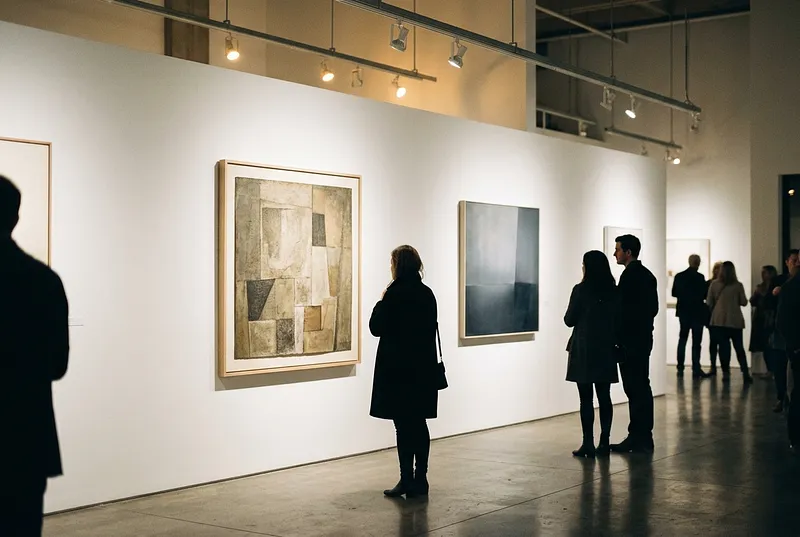
Les conférences et artist talks. Apprentissage plus communauté. Conférences d'art, panels, tables rondes. Programmes des musées. Conférences universitaires publiques. Nouvelles connaissances et nouveaux contacts qui comprennent en même temps.
Apprendre le business, ce n'est pas trahir l'art
Le mythe persiste : un artiste qui apprend le marketing, la vente, les contrats, trahit l'art, se compromet, devient mercantile. C'est absolument faux. C'est une idée nuisible qui laisse les artistes pauvres, dépendants, sans pouvoir. Les maîtres de la Renaissance tenaient les comptes avec rigueur. Calculaient les matériaux, les frais d'atelier, le coût du temps. Négociaient les prix avec les commanditaires. Géraient des ateliers avec des apprentis. Personne ne dit jamais que Michel-Ange était moins grand, moins artiste, parce qu'il comprenait l'argent et les contrats.
Les compétences commerciales sont des outils. Comme un pinceau. Comme un appareil photo. Tu n'as pas besoin de devenir entrepreneur ou business-man. Mais les bases—comment fonctionne l'argent vraiment, ce qu'est un contrat, ce qu'est le marketing authentique—c'est la fondation d'une carrière durable et respectueuse. Cherche des mentors. Assiste à des conférences. Parle avec des artistes qui ont déjà traversé ce territoire. Ils existent. Ils veulent partager.
Comment faire de l'apprentissage une partie de ta pratique
L'erreur commune : traiter l'apprentissage comme « plus tard, quand j'aurai du temps ». Ce temps ne viendra jamais. Fais-en plutôt une partie régulière de ta pratique. Petites étapes constantes.
Un article pertinent par semaine. Un podcast en studio. Un atelier par mois. Une résidence par an. Un livre par trimestre. Pas d'héroïsme. Juste une décision profonde : je continue à croître. C'est mon engagement envers mon travail.
Garde un carnet pour noter tes idées, tes découvertes, les questions soulevées. Pas tout sera utile la semaine prochaine. Mais dans un an, face à un problème créatif ou professionnel, tu te souviendras d'un article que tu as lu ou d'une conférence que tu as écoutée qui donne une réponse ou une nouvelle perspective. La connaissance ne fonctionne que si elle s'accumule. Pas en fragments isolés. Mais en une structure.
Apprends de ceux qui ont réussi ce que tu veux faire. Pas des théoriciens sans expérience. Des praticiens. Un artiste qui vend bien en ligne t'apprend plus que dix manuels de marketing. Un artiste qui obtient des résidences prestigieuses sait quelque chose que tu dois apprendre.
Apprendre est un signe de force
Certains artistes voient l'apprentissage comme une admission de faiblesse, d'ignorance. « Si je vais à un atelier ou à une conférence, ça signifie que je ne sais rien. » C'est une pensée erronée. Apprendre, c'est une forme de confiance en soi. Ça signifie : je sais que je peux faire mieux, je suis curieux, je veux grandir. Les meilleurs artistes du monde—les plus forts, les plus reconnus—apprennent constamment. Pas parce qu'ils le doivent. Parce qu'ils sont profondément curieux. La curiosité, c'est le carburant de l'art. Sans elle, tu stagne.
Un plan trimestriel simple
Minimum viable : un livre par trimestre—business, marketing, psychologie, histoire, pas seulement l'art pur. Un cours en ligne ou un atelier pratique. Une conférence ou artist talk. Trois à quatre articles de qualité par mois. Une étape majeure par an—une résidence, une conférence importante, un mentor que tu approches. Pas accablant. C'est équilibré et sustainable.
Garde un carnet avec les idées clés, les passages qui t'ont parlé. Un an plus tard, face à un problème créatif ou une opportunité, tu te souviendras d'une conférence qui contenait la réponse. Les notes, c'est la sagesse stockée, archivée. Tu notes aujourd'hui, tu utilises demain, tu appliques dans cinq ans. Certains pensent que retenir mentalement suffit. C'est faux. Le cerveau retient environ cinq pour cent de ce que tu lis passagèrement. Les notes en retiennent quatre-vingt-quinze. Garde un carnet : la connaissance devient du capital, du pouvoir.
En trois ans d'apprentissage régulier tu seras un artiste profondément différent. Pas parce que quelqu'un t'a transformé avec une formule magique. Parce que tu n'as pas arrêté. Tu as bougé. Tu as grandi. Tu as approfondi. Tu as exploré. Et ça se voit dans ton travail, dans ta confiance quand tu parles d'art et de toi comme artiste, dans ta capacité à naviguer le monde de l'art avec dignité et clarté.