Ask an artist about an exhibition from three years ago, and usually they pause. The exact title? Gone from memory. The gallery address? They'd have to search emails. Prices from that period? Vague. Who bought the triptych that hung in the studio for months? Maybe they remember, maybe not. After five years, entire projects blur together. After ten, artists describe dozens of works whose photographs vanished, exhibitions whose details scatter, sales whose terms are forgotten. This isn't memory failure—it's the normal consequence of creating constantly without documentation.
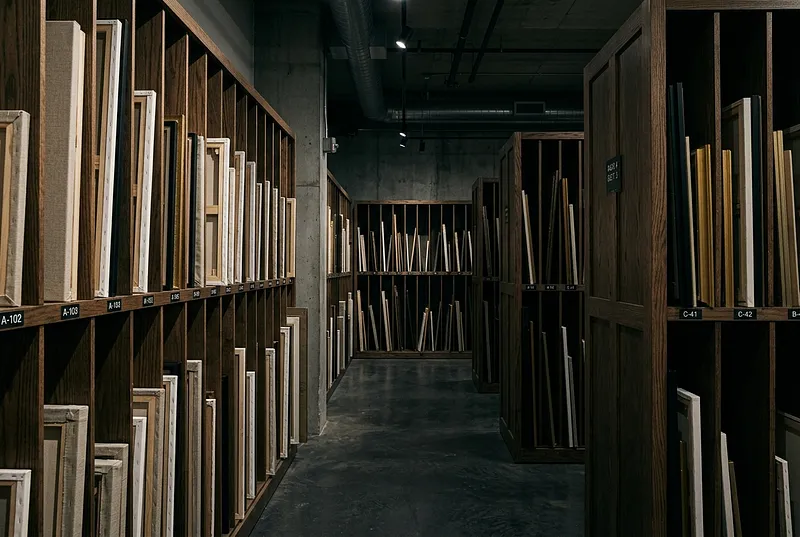
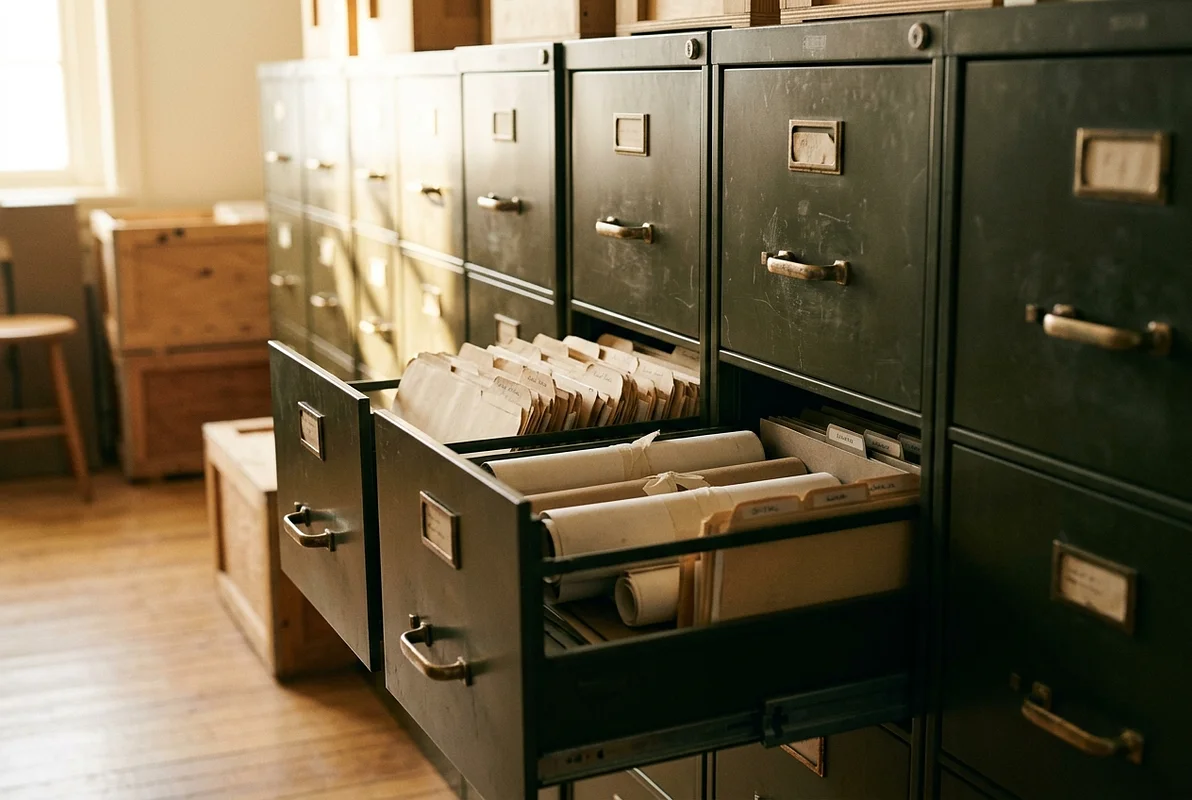
But here's what changes everything: an archive. Systematic record-keeping transforms artistic practice from a stream of temporary moments into a coherent professional history. With an archive, you answer any question about your work in thirty seconds. You're not hunting through old emails or searching drives. The information is there, organized, accessible. This isn't a luxury for famous artists. It's foundational infrastructure for every artist serious about their practice.
Why Archives Matter Beyond Nostalgia
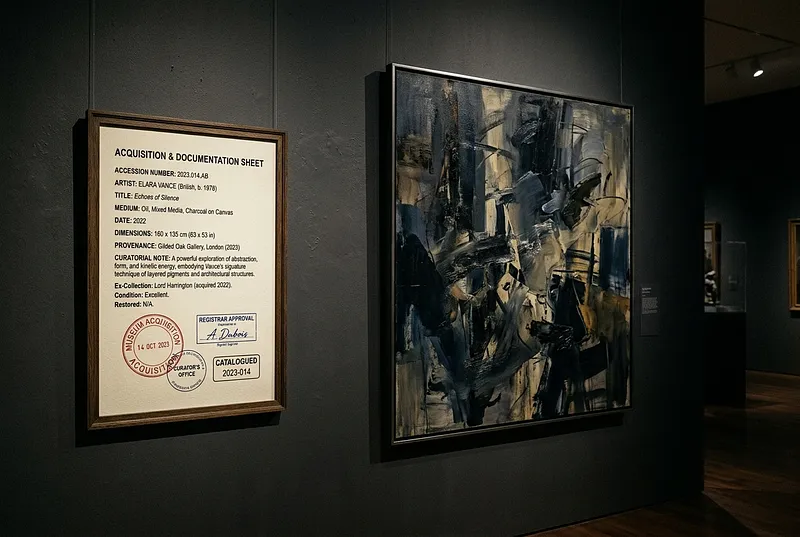
An archive is systematic record-keeping: works, exhibitions, sales, publications, photographs, documents, contacts, correspondence. It's the ability to instantly retrieve any information about your practice. Without it, knowledge scatters—photos on different drives, contacts in notebooks, pricing floating in memory, exhibition details blurred together.
Archives matter practically. Your CV needs exact dates, curator names, exhibition titles, venue locations. Grant applications demand clear documentation of past work and exhibitions, and nobody wants to write grants in panic mode. Taxes require proof of income and expenses. Insurance for your work—valuable pieces need documentation of creation, value, and current location. Provenance conversations require complete history of a work. A collector wants to know: where has this piece been, who owned it previously, what's its documented history?
Beyond practicality is something deeper. When you open your archive and scroll through five years of evolution, you see something tangible. Worked completed. Exhibitions mounted. Sales achieved. Growth visible. "I am making. I am moving forward. I exist in the art world." In moments of doubt—and every artist has them—this evidence is invaluable. Not vanity. Not ego. Proof of continuity and progress.
The Works Register: Your Foundation
Everything begins with a works register: a spreadsheet of every piece you've created. Each entry includes: inventory number (2025-001, 2025-002, etc.), title, year, medium, dimensions, series name, status (in studio, on exhibition, sold, lost), price (or original asking price), current location, who purchased it, sale date, link to photograph files.
When you complete a work, assign it a number immediately. Then take three photographs straightaway: full view, detail showing texture or technique, and one in context (in your studio, or wherever it is). Name the files sensibly: not "IMG_4532.jpg" but "2025-001_title_front.jpg" and "2025-001_title_detail.jpg". This five-minute discipline compounds into complete documentation you'll value forever.
As work moves through your life—sold, exhibited, changed location, damaged—update the status. When it sells, record the sale. If work is lost or destroyed, note that. This registry becomes your professional biography encoded in spreadsheet form. Years later, you open it and see the entire arc of your creative output.
Exhibition Folders: Capturing the Moment
Each project needs dedicated storage. A folder named "2025-05_Title_VenueName" containing: exhibition catalogue if printed, exhibition photographs, invitation or announcement, press release, participant lists if available, any reviews or media mentions, opening night images. Update your CV immediately after closing. This takes ten minutes and completes the record.
What seems like a minor project today becomes historically significant tomorrow. That small group show led to a gallery relationship. That café exhibition connected you with a collector. Years later, when applying for major grants or preparing retrospective documentation, these details become precious. They're evidence of your professional activity. Without written records, they vanish from your history as if they never happened. The exhibition disappears into the fog of memory.
Sales and Financial Records
Track every sale: date, work sold, dimensions if applicable, buyer if you wish to record it, amount received, payment method. Track every significant expense: materials, studio rent, frame supplies, printing, competition fees, professional development. Over a year you see money's flow. How much income, how much outflow, what sustains itself, what requires subsidy.
This is essential for self-employed taxation. If you're not yet self-employed, examining these numbers still reveals truth about your economics. Where does time translate to income? Where does it not? This honesty helps with strategic decisions. Some income streams are efficient. Some are not. Some expenses are necessary. Some are optional. Data reveals reality that intuition obscures.
Your Address Book: Relationships as Data
Maintain a contact database: gallerists, curators, collectors, journalists, fellow artists, residency directors, competition organizers. For each: name, organisation, email, phone, where you met, date of contact, what you discussed, what they're interested in, when you last communicated. Art is relationships, and relationships require memory. Without written records you forget crucial details. You meet a curator interested in landscape work but forget until you Google them. With records, you remember: "Interested in landscape themes. Met at 2024 Vienna fair. Last contact March. Should mention new series." This transforms you into someone who values relationships, not someone broadcasting indiscriminately.
The 3-2-1 Backup Rule
Everything important exists in three places: on your primary computer, on an external drive, and in cloud storage. Google Drive, Dropbox, OneDrive—choose one and use it consistently with automatic backups enabled. This isn't paranoia. Hard drives fail. Laptops break. Fire happens. Theft happens. Professional artists don't take the risk of losing complete archives to a single device failure.
Organize cloud storage with consistent structure. Year → Works, Exhibitions, Documents, Finances. Or by projects if you work project-based. One system, maintained consistently. Don't reorganize monthly—organizational churn consumes more energy than the initial setup.
Documenting Process: From Intention to Completion
Record stages of work development, not just finished pieces. Sketch → study → rough → refinement → final. Timelapse video of a studio session. Brief notes on what inspired the work, which decisions shaped it, why you chose certain materials. After each studio session, note: what was accomplished, what comes next, any technical challenges encountered.
This isn't busywork. Process documentation becomes content for social media, material for your artist statement, source for understanding your own development. It also makes your practice transparent to others. When people see your work in process they feel connected to you as a person, not just as a creator. Process humanizes art and builds emotional connection stronger than finished work alone can achieve.
A studio journal—brief entry after each session—serves as a mirror of your thinking. Six months in, patterns emerge. Which ideas led to series? Which became dead ends? Which materials work best? What concepts return repeatedly? This self-knowledge is impossible to access without recording it. You're creating evidence of your own creative development, which is precious beyond its archival value.
When to Start
Today. Not Monday, not January. Spend an hour: create a spreadsheet, list works from the past year or two, assign inventory numbers to what you remember. Record what details remain in memory. Tomorrow, memory will be hazier. Next week, even more distant. The longer you delay, the more information vanishes irretrievably.
Maintenance takes little time. Five minutes after completing a work. Ten minutes after closing an exhibition. One hour monthly to review and update. This is time that returns tenfold in efficiency, in clarity, in the completeness of your professional history.
Platform Archives: Built-In Documentation
If you use a portfolio platform like Artfond, most archiving happens automatically. The platform functions as built-in cataloguing system: title, year, medium, dimensions, series, price, status, photographs. Your CV can generate automatically from this data. This doesn't replace a complete personal archive—you should still maintain external backup of your own records—but it significantly eases maintenance and ensures information is captured consistently.
Even on other platforms, one principle applies: create a single, searchable location where all information concentrates. Whether spreadsheet, specialized software, or integrated platform, the key is accessibility and consistency. You should answer any question about your work without searching.
The best archive is the one you start today. The worst archive is the one you'll start later, when more information has vanished. Begin now.