Le mythe dangereux qui endette les artistes
« Un vrai artiste ne gagne de l'argent que de l'art pur. »
C'est une belle fausseté qui se transmet de génération en génération, comme un mythe romantique qui paralyse la réalité. Même les plus grands artistes du monde n'ont jamais vécu uniquement de ventes d'originaux—jamais. Picasso avait des contrats. Frida Kahlo avait des mécènes. Les artistes contemporains qui travaillent au Centre Pompidou ont des bourses, des commandes publiques, des résidences financées. Des milliers d'artistes vivant aujourd'hui ont besoin de plusieurs sources de revenu simultanées pour avoir la stabilité financière.
Ce n'est pas une trahison de l'art. C'est une stratégie de survie qui te donne en réalité plus de liberté créative que de te fixer sur une seule source instable. Quand tu as un revenu stable qui vient de plusieurs canaux tu n'es pas obligée de vendre ce qui se vend bien. Tu peux risquer, expérimenter, créer ce que tu veux vraiment créer. Sans coussin financier diversifié tu écris pour l'algorithme Instagram et tu fais ce que les galeristes veulent, pas ce que tu veux. La diversification ce n'est pas un compromis. C'est la libération créative véritable.
Canal un : les originaux—le rêve instable
Principal revenue stream, mais le plus instable de tous. Un mois deux ventes, puis trois mois de silence complet. C'est comment le marché de l'art fonctionne—il respire, il a ses rythmes. Mais vivre uniquement de ça c'est du stress permanent, une montagne russe émotionnelle. Ça doit être une partie importante seulement, pas la totalité.
Les ventes dépendent de centaines de facteurs hors de ton contrôle : la saison économique générale, l'humeur des collectionneurs ce mois-ci, l'économie du pays, même la météo le jour du vernissage. Pour stabiliser : offre différents prix pour rendre accessible à plusieurs niveaux. Vends par plusieurs canaux à la fois—directement, par galeries, par agents. Construis des relations avec des acheteurs réguliers qui reviennent.
Canal deux : reproductions et estampes—le revenu passif qui scale
Un revenu passif qui peut croître sans limite. Tes pièces les plus populaires deviennent des estampes. Giclée fine art sur papier ou sur toile. Vendues par ton site, Etsy, des plateformes spécialisées de tirage à la demande. Un original génère des copies illimitées dans des tailles différentes, à des prix différents, pour des audiences différentes.
Quelqu'un qui ne peut pas dépenser cinq mille euros pour un original paiera cinq cents pour une estampe haute qualité et aura quand même ton travail chez lui. Tu gagnes une nouvelle audience et gagnes une vente. Ça augmente la visibilité de l'original, ça ne la diminue jamais. C'est comment ça marche : quelqu'un achète une estampe, l'accroche dans sa chambre, la montre à des amis, ton nom revient en conversation. Un an plus tard cette même personne mûrit vers l'original et l'achète parce qu'elle t'a connu par l'estampe. C'est une évolution naturelle, pas une manipulation.
Une édition limitée : trente estampes signées et numérotées. Ça ajoute de la valeur plutôt que la diminuer. La rareté coûte toujours plus cher que l'infini.
Canal trois : master classes et ateliers—ta connaissance comme valeur
Tu sais des choses que d'autres ne savent pas. Des techniques précises, des matériaux spécifiques, des nuances de couleur qui ne sont dans aucun manuel. C'est de la valeur véritable. Les gens paient pour ce savoir et pour apprendre de toi directement.
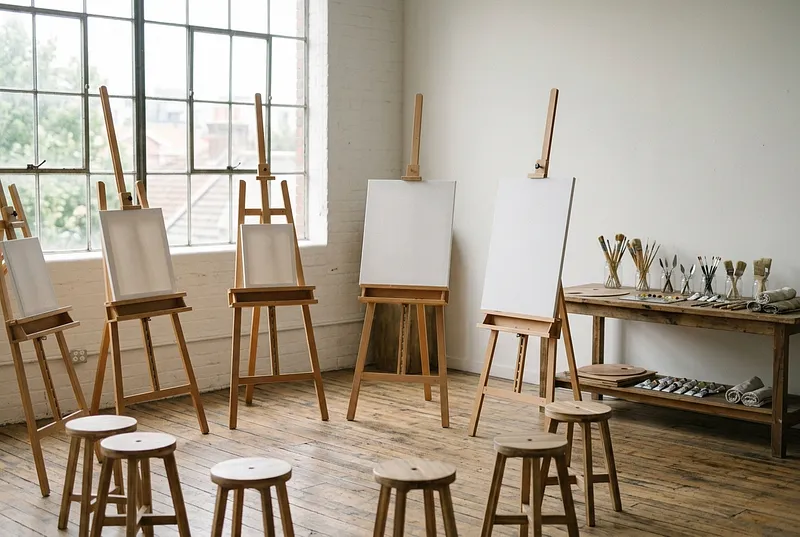
Des classes d'une ou deux heures. Des séries de workshops intensifs. Du team-building d'entreprise. Des walks artistiques thématiques en ville. Les options varient énormément, chacun artiste a sa niche. Les clients corporatifs paient trois à cinq fois plus que les particuliers et demandent souvent des formats non-standards créatifs. Un événement corporate équivaut souvent à cinq master classes normales pour les revenus. La plupart des entreprises qui te cherchent pour du team-building sont prêtes à te laisser créer ton propre format. Elles ne veulent pas de peinture traditionnelle. Elles veulent une expérience créative vivante dont les employés se souviendront réellement.
Tu peux offrir de la création libre, des expériences immersives, de la création collaborative. La créativité appliquée au format commande corporatif commande un prix premium sur le marché des services corporatifs.
Canal quatre : cours en ligne—créer une fois, vendre éternellement
Tu enregistres un cours une fois. Tu le vends pendant des années. Leçons vidéo, matériel PDF à télécharger, devoirs optionnels. Plateformes : Udemy, Skillshare, Domestika, ou ta propre plateforme via Teachable.
Prix : trente à deux cents euros selon la profondeur et ta réputation. Les premiers mois c'est du travail actif sans revenu immédiat. Puis, une fois terminé : un flux de revenu qui ne demande aucun effort quotidien. Un cours enregistré en 2025 te gagnera de l'argent en 2028 sans effort supplémentaire. C'est le rêve du revenu passif vrai.
Canal cinq : mentorat et consultation—partager l'expérience
Examen critique de portfolio pour les jeunes artistes. Sessions de mentorat régulier. Consultation sur la tarification, la stratégie commerciale, la documentation pro. Si tu as de l'expérience réelle il y a toujours quelqu'un qui la valorisera et paiera pour ça.
Cinquante à deux cents euros par session d'une heure c'est le standard du marché français. C'est l'un des canaux les plus gratifiants psychologiquement parce que tu impactes directement la vie et la trajectoire de quelqu'un. Les artistes arrivent à toi incertains, perdus, sans feuille de route, et tu les aides à voir les chemins. C'est profondément significatif. Bonus intéressant : expliquer ta pratique aux autres approfondit ta propre compréhension. Ce n'est plus quelqu'un qui te l'explique. Tu guides quelqu'un d'autre. Ça change ta propre perspective sur ce que tu fais.
Canal six : collaborations de marque—ton art dans le commerce
Merch : tes œuvres sur des objets (posters, t-shirts, mugs, couvertures). Licence : les marques te paient pour l'utilisation de tes images. Collaboration : édition limitée en partenariat. Design d'intérieur commercial : tes pièces dans les hôtels, restaurants, bureaux professionnels. Ambassadrice : tu promeus une marque de matériaux avec laquelle tu identifies.
Commence localement : cafés, restaurants, boutiques. Ne viens pas avec une proposition abstraite. Viens avec quelque chose de concret. « J'ai une série de cinq posters pour ton espace, voici à quoi ça ressemblera. » Montre des maquettes. Sois prête à nommer ton prix en premier. Ça accélère la conversation.
Canal sept : bourses et résidences—financement institutionnel
Financement pour les projets et les nouvelles séries des fondations, gouvernements, organisations internationales. Résidences avec logement, matériaux fournis et bourses couvrant tes coûts de vie.
Candidate régulièrement et systématiquement. Ce n'est pas une candidature unique. C'est une pratique continue. Pas chaque candidature donne une bourse—c'est normal. Mais chacune affine ta déclaration d'artiste, ton portfolio, ta capacité à articuler tes projets clairement. N'abandonne pas même si les chances semblent faibles statistiquement. Une bourse peut financer une série entière et te donner des mois de créativité sans pression financière immédiate. C'est transformateur.
Pourquoi la diversification c'est la vraie liberté
Quand un canal s'effondre les autres tiennent. Galerie ferme ? Tu as les ventes directes et les estampes. Les ventes de pièces ralentissent ? Tu fais des master classes et des cours en ligne. Tout ralentit en même temps ? Une bourse finance ta nouvelle série. Le réseau entier te rattrape.
Ce n'est pas un calcul mécanique. C'est une sécurité psychologique véritable. Quand tu sais que tu ne dépends pas d'une seule source fragile tu dors mieux. Tu es moins stressée. Le stress financier constant c'est l'un des pires tueurs de créativité. Quand le stress diminue la créativité s'épanouit naturellement.
Chaque canal est aussi une porte d'entrée pour les gens vers ton art. Un étudiant de cours en ligne t'achète un original un an plus tard. Un participant à une master class devient un suivi régulier de ton travail. Une marque pour laquelle tu as fait du merch devient un client régulier. Ce ne sont pas des revenus séparés et compartimentés. C'est un écosystème où chaque élément amplifie les autres. Quelqu'un qui te connaît par trois canaux à la fois a trois fois plus de chances d'acheter un original que quelqu'un qui te connaît juste par Instagram.
Comment présenter les services sans diminuer ton art
Les services supplémentaires doivent faire partie intégrante de ton image professionnelle, pas un « side business » honteux. Ils doivent amplifier ton identité d'artiste, pas la diluer.
Une page séparée sur ton site pour les services. Highlight Instagram avec photos des ateliers, témoignages participants, tarifs clairs. Email annonçant les nouveaux cours ou workshops.
Détail clé : les services doivent montrer ton expertise et ton importance, pas ressembler à un acte de désespoir financier. Quand tu offres une master class tu ne demandes pas de l'aide. Tu donnes aux gens un accès à un savoir qu'ils n'auraient pas autrement. C'est un don intentionnel, une position professionnelle noble et confidente.
La preuve sociale c'est le meilleur marketing pour les services. Photos des participants aux classes. Témoignages d'étudiants satisfaits. Remerciement d'un client qui a acheté une estampe après un workshop. Chaque fragment fonctionne mieux que la publicité parce que c'est authentique et vrai.
Ne lance pas tous les canaux à la fois—la croissance intelligente
Commence avec un canal supplémentaire le plus proche de toi et de ta nature. Tu aimes parler et échanger ? Fais des master classes. Tu crées beaucoup de contenu et de documentation ? Crée un cours en ligne. Tes œuvres ressemblent bonnes en reproductions ? Fais des estampes haute qualité.
Essaie, affine, stabilise. Ajoute le canal suivant juste quand le premier marche bien et génère un revenu régulier. En un an tu auras un système diversifié qui gagne même quand tu es entièrement à l'atelier créant.
Un artiste avec plusieurs revenus c'est un artiste libre. Il crée ce qu'il veut. Ce n'est pas un compromis des rêves. C'est une stratégie professionnelle intelligente.