Your work sits in a corner under a blanket. Near a radiator. Under a window where sun blazes for hours every afternoon. Maybe in a damp attic with wild temperature swings, or a basement that floods every spring. This is common. It's also a slow-motion catastrophe that most artists don't realise is happening until it's too late. Paint cracks. Paper yellows and becomes brittle. Mould creeps across the back. Canvas warps. Metals corrode. Everything that's happening is preventable if you understand a few basic rules. The difference between work that survives intact in twenty years and work that crumbles comes down to storage conditions. Nothing else matters as much.
Four main enemies
Temperature is the first and most critical factor. Ideal range is 18–22°C, which is just normal room temperature. Below 10°C and materials become brittle, condensation forms on surfaces, and stress builds inside the work. Above 30°C and oils soften, wood warps, and structural integrity begins to break down. But here's what most artists don't realise: fluctuations are worse than absolute temperature. A consistent 20°C—even if it's not "ideal"—beats wild swings between 15–25°C. Those swings create expansion and contraction stress that damages the work from inside. Never store near radiators, which create heat and dryness. Never near air conditioning units, which create cold and moisture. Never under windows where sunlight causes sharp temperature shifts throughout the day and across seasons. A north-facing window with changing light and temperature daily is the most damaging spot in your entire home.
Humidity is the second critical factor. The ideal range is 45–55%. Below 30% and canvas becomes dry and brittle, paint cracks, paper becomes fragile and brittle to the touch. Above 65% and mould develops, fungus takes hold, metals oxidise. The problem is that most artists have no idea what the humidity is in their storage space. Buy a digital hygrometer with min/max recording function—they cost £15–25—and find out. Install it in your storage area for a week. It will show you exactly how much humidity fluctuates over the course of a single day. This information is critical, especially for lofts and basements where humidity can swing 20–30% daily without proper ventilation.
Light is the third enemy. Direct sunlight is the primary culprit. UV radiation fades pigments, destroys varnish, yellows paper. The maximum light exposure for paintings is 150 lux. For works on paper it's 50 lux. Solution: store in darkness. Use UV-filtering film on windows if you have to store near them, or install heavy curtains. Fluorescent lights emit UV radiation. Use LED lighting instead, which is UV-free. If you must display or view the work, use LED lighting and keep it as brief as possible.
Dust and pests are the fourth factor. Use breathing fabric—cotton or specialist Tyvek, never polythene which traps moisture and causes condensation. Raise everything 10 cm off the floor where moisture gathers and insects congregate. Ventilate the space monthly, but without creating draughts. Lavender oil or cedar rings prevent insects cheaply and naturally.
How to store paintings properly
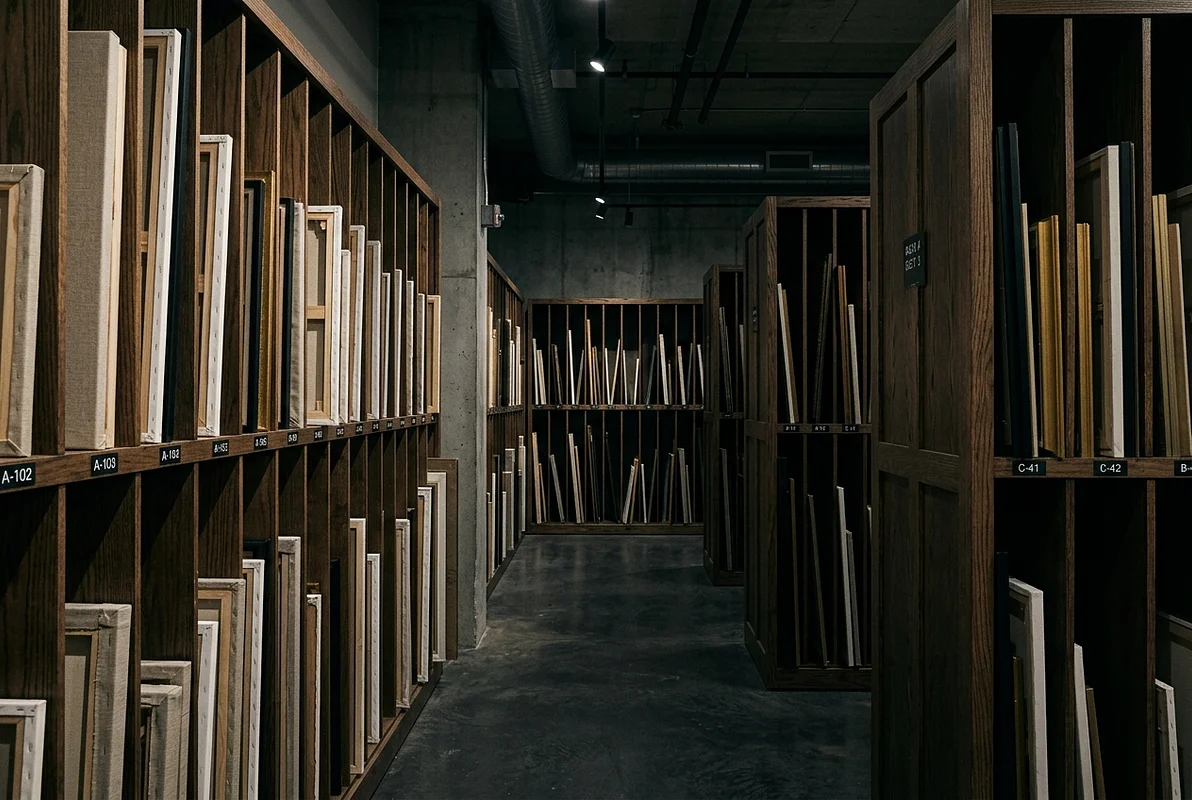
Canvas on stretchers stands vertically, like records on a shelf. This is the museum method. It prevents rope damage from stacking. Between works, use acid-free cardboard or glassine spacers. Face the canvases inward so textures don't imprint on each other. Never lay canvas flat. Pressure deforms it permanently. Wet paint sticks to itself. Oil paint surface-dries in about a week, but deep layers—dark colours especially—stay soft for months. Varnish can take weeks to cure fully. Stacking flat forces all these layers to set against each other, creating permanent damage.
How to store works on paper
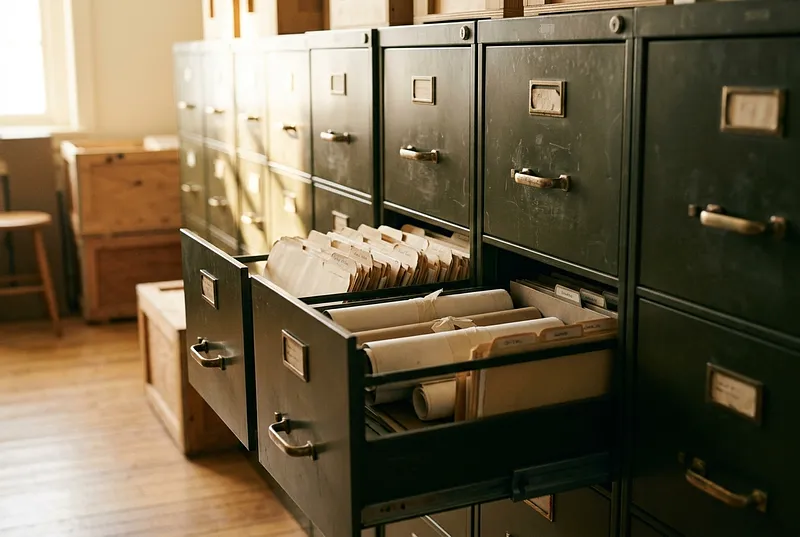
Flat in folders or boxes—this is the museum standard for a reason. Place each sheet in acid-free covers. Never ordinary cardboard, which yellows and damages fibres. For valuable work, use conservation-quality matting which absorbs excess moisture. Large works can roll on cardboard tubes—not plastic—wrapped in glassine. But unrolling risks damage. Flat storage is better, even if it requires larger boxes.
How to store three-dimensional work
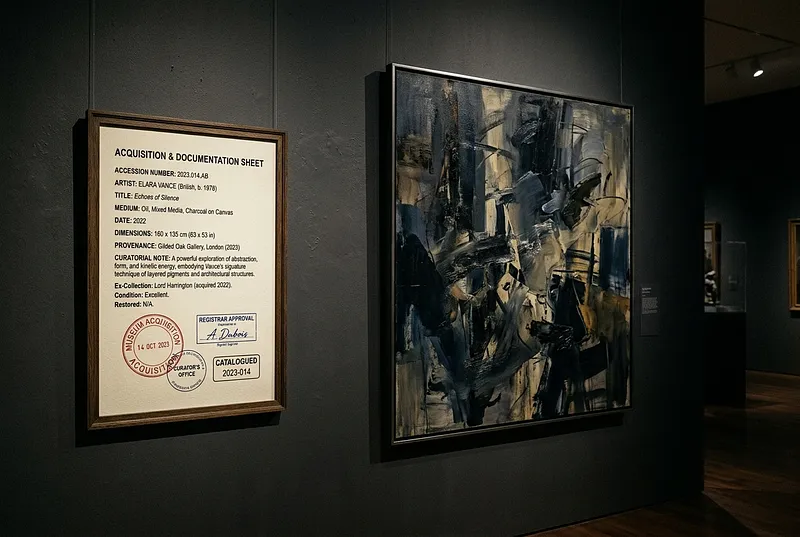
Each piece is unique. Each protruding element gets separate wrapping. The base must be fixed with foam cut exactly to shape so nothing moves during storage or transit. Never stack heavy work on light. Wrap fragile bits separately. Fill all voids so nothing can shift. Essential: photograph from every angle before storage. This is insurance documentation. Proof of condition at the moment you put it away.
Digital files need storage discipline too
Apply the 3-2-1 rule for data: three copies, two types, one offsite. First copy: your computer. Second: external hard drive in a drawer, updated monthly. Third: cloud storage with automatic sync. This redundancy means if one fails, two remain intact. Once yearly, verify all copies are still readable. Files degrade over time, especially on older media. USB and SD cards aren't reliable long-term—they're vulnerable to oxidation, moisture, and shock. If you use them, rewrite annually to a fresh drive or hard disk. Organise files by year and format. Everything in one folder causes errors and loss during system upgrades.
The bare minimum to start
Most emerging artists don't have climate-controlled storage. Implement the basics anyway. It's simple and inexpensive. Digital hygrometer: £15–25 with min/max recording that tracks humidity changes over time. Breathing fabric—cotton or specialist Tyvek, never polythene which traps moisture. Move everything away from radiators, AC units, and windows with direct sun. Place acid-free spacers between canvases. Raise everything 10 cm off the floor. Scatter silica gel packets throughout the storage area to absorb excess moisture. No major investment. Enormous return. Every preserved work can be exhibited, sold, or placed in a museum. Every damaged work is a permanent loss. Skimping £50 on a hygrometer could cost thousands in lost sales. Collectors pay premiums for perfect condition. Works with visible cracks, mould, or yellowing are 30–50% cheaper, even if the damage occurred after purchase.
Storage as a discipline
Storage isn't a one-time action you complete and forget. It's a system you maintain for life. Quarterly: check the hygrometer readings and record the data. Yearly: do a full inventory of every work you've created. Examine each piece carefully for micro-cracks, colour shifts, fading. Refresh your spacers if they've degraded. Top up silica gel packets. Verify storage conditions in your digital archive and create fresh backups of all digital files. Spread this work across months—one system element per month. The important thing is that the system stays active and adapts as your collection grows and climate conditions change.
Proper storage now translates directly into proper market price ten years from now. What you do in your studio corner, unwatched and unglamorous, determines whether the work survives decades in someone's collection. It guarantees that the masterpiece you created with effort and vision will still be a masterpiece for every future viewer. Condition is provenance. It's history. Collectors and museum curators explicitly pay premiums for work known to have been properly stored and maintained throughout its life. Twenty years later, a museum receives your work in pristine condition. Not sentimentality—justice to your labour and what future viewers deserve to see. Crumbling works are a tragedy for art history. Proper storage is a moral choice as much as a practical one.