You've made the sale. The buyer is in Berlin. You're in London. Now comes shipping. And everything can unravel in transit. A work arrives scratched, cracked, or dented—it's not just a lost piece. It's a lost customer, permanently. A collector who receives damaged work won't return. They won't refer you. They'll remember the carelessness, not the work. This is the art market's most unforgiving rule. Packing and shipping has precise methods for every type of work. Every shortcut is a risk you take yourself, and insurance won't cover negligence. What you do in the studio with proper materials takes hours. Careless packing takes an afternoon and ruins everything.
Essential materials you need before you start
Gather everything before you start packing. Glassine paper—acid-free, for the first layer. It doesn't stick to the surface and leaves no marks. Bubble wrap in bulk. Foam sheet. Cardboard corner protectors. Boxes in multiple sizes. Wooden crates for valuable work. Silica gel packets for moisture control during shipping. Heavy-duty packing tape. Black marker for clear labelling. This list is the absolute minimum, not a "just in case" collection of optional items. Sending artwork to an unknown destination without these materials is genuinely irresponsible to both the buyer and yourself. The most common and costly mistake artists make is trying to save money on packaging materials, then ending up paying for insurance claims and reputation damage.
How to pack paintings
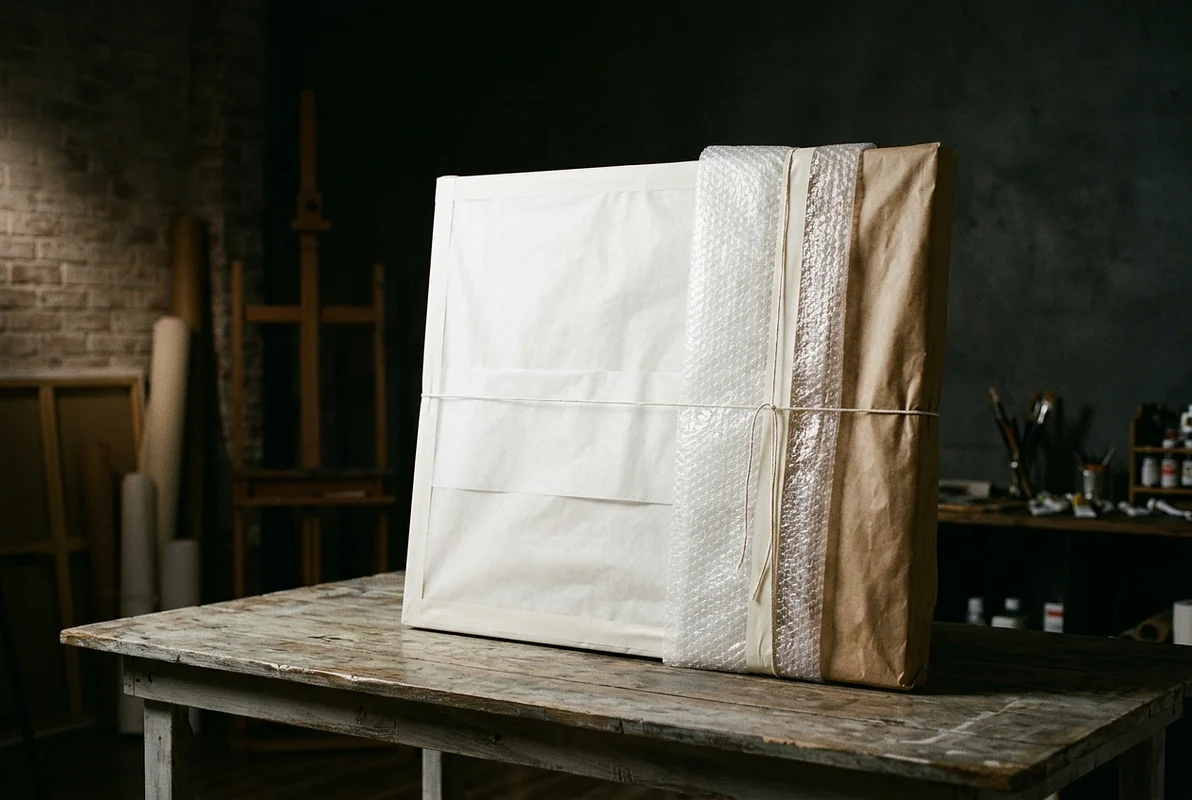
Start with a surface that's dry and clean. Dust lightly with a soft brush—never cloth, which can snag or damage the surface. Apply glassine on the front side, wrapping carefully. Glassine breathes and won't damage the surface. Then bubble wrap: two or three layers minimum. This is critical: bubbles face outward, never touching the painted surface. Bubbles pressing into soft oil paint create imprints that are irreversible. Corners are the most vulnerable points in a fall, so use cardboard protectors on all four. Place the work in the right-sized box—not too loose, not crushed. Fill all voids with foam, bubble wrap, or crumpled acid-free paper. Nothing should move. Test it: shake the box gently. If anything moves, add more filler. No sounds inside.
Works on paper, prints, photographs
Glassine on the front. Acid-free board on both sides—a rigid sandwich against bending impacts. Everything sealed in polythene for waterproofing. Then that bag goes into a cardboard box or rigid mailing envelope. Large works need flat boxes with 5mm minimum rigid cardboard inside and on top so paper doesn't bend under weight. Never fold or roll original work for international shipping without written agreement from the buyer. Mass-produced prints can roll safely. Original work always ships flat. Fragile or old paper: light folding creates irreversible fibre damage. Sending a large flat box is often cheaper than ruining the work and your reputation.
Sculpture and three-dimensional objects
Each piece is unique, so each requires customised wrapping. Every protruding element gets separate wrapping before you begin the main protection. The base must be fixed with foam cut exactly to shape so nothing moves during transit. Never stack heavy work on light. Wrap fragile bits separately before they're anywhere near other pieces. Fill all gaps. Nothing moves. For fragile work, use a double-box system: small box inside a larger one with 5cm air cushioning between. Label every side: FRAGILE, THIS SIDE UP with arrows. Ceramic and glass need three film layers minimum per piece. Photograph every stage before sealing the box. Those photos are your insurance documentation.
International shipping requires extra care
International parcels pass through dozens of hands, conveyor systems, x-ray machines, and multiple climate zones. This means environmental stress that domestic shipping doesn't see. Add silica gel packets—they absorb moisture in temperature swings. Winter shipments need thermal insulation film. For work over £1,000 or large formats: double-wall cardboard or wooden crates are mandatory, not optional. Skimpy packaging abroad guarantees losses.
Label in English: FRAGILE, HANDLE WITH CARE, THIS SIDE UP, ORIGINAL ARTWORK. Photograph each stage of packing and sealing. These photos become your insurance claim proof. Insurance requires them as evidence of proper packing. For wooden crates overseas, IPPC phytosanitary requirements apply: wood must be heat-treated at 56°C for 30 minutes with special marking. Without it, customs holds the package indefinitely. Alternative: plywood crates, which don't require certification in most countries.
Choosing the right shipping service
Within the UK: specialist art couriers or Royal Mail Special Delivery Guaranteed with full insurance. Within one city: personal delivery if possible. International: DHL, FedEx, UPS with full insurance. Budget shipments: standard Royal Mail works for smaller pieces. For valuable work—£5,000 and above, or large format pieces—use specialist art shippers like Cadogan Tate or Momart. They cost more, absolutely. But they understand art. Climate control. White glove handling. Full documentation. One damaged masterpiece costs more than all your shipping savings. That's not pessimism. That's mathematics.
Documents that travel with the work
Work never ships without documents. This isn't bureaucracy. It's protection for both sides. Include: certificate of authenticity, passport photocopy, invoice with value, condition report describing what the work looks like at shipment, care instructions, materials list. Fold these in a waterproof envelope, sealed, inside the box on the top layer. Not outside where rain strips it. Not between layers where documents get lost during unpacking.
A buyer who receives your work in professional packaging with all proper documents and clear instructions feels they've been treated specially, like an important person. They return for more purchases and recommend you to others. A buyer receiving work in newspaper wrapping with no papers or instructions sees something entirely different. They won't come back positively. Packaging and documentation aren't logistics. They're part of your communication. They're your message about professionalism and respect.
If damage happens during delivery
If the work arrives damaged: don't throw away packaging—it's evidence. Photograph the damage from every angle plus the box. Document everything with the courier immediately. Notify the shipper within 24–48 hours. File a claim with photos, invoice, description, and insurance certificate. Get a conservator's damage assessment. Insurance pays based on that assessment. Prevention is easier than claims: photograph work and packaging before shipping. For expensive work, video the entire packing process. Insure full value. Keep all receipts, tracking numbers, and certificates. This protects both sides.
Shipping as your final communication
Shipping is your final and crucial communication with the buyer. The work is sold but not yet in their hands. This is your last chance to demonstrate professionalism and care. Perfect packaging, complete documents, and clear instructions communicate loudly: "This artist is serious and professional. This work is valuable and has been treated as such." Badly packed work with missing papers says only: "I don't care." That impression stays with the buyer long after they unpack it, and they'll remember it when deciding whether to buy from you again or recommend you. Shipping isn't separate from your art. It's the final expression of it.