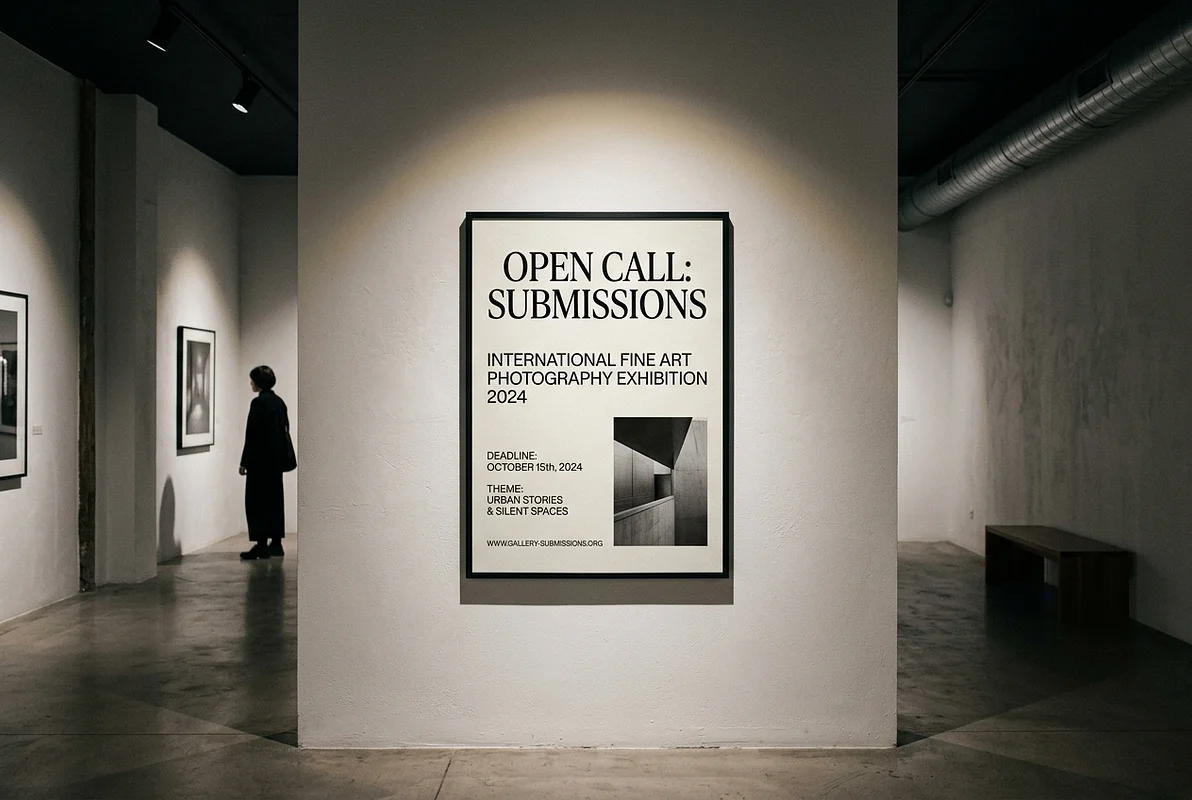
You have no connections in the art world. No curator friends who pass along private view invitations from the institutions that matter. No dealer on speed dial. And here's what most of the industry won't tell you: that's actually your advantage. Open calls are the only arena where the system is designed to level the playing field. The jury cannot play favourites. Everything rests on one thing and one thing alone—your work, your strategy, and how carefully you've read the brief. Connections don't help here. In fact, they actively hurt. When a jury spots an artist who comes with a recommendation already embedded in the process, they register it immediately. Someone's handed you an unfair advantage before the work has even been properly evaluated. That's not talent. That's privilege. And the best juries smell it a mile away.
Open calls, then, are genuinely your gateway. To museum projects. To serious exhibitions that travel. To residencies abroad where you work alongside artists from fifteen countries and leave with a transformed practice. But here's the catch: quality alone won't carry you through. Hundreds—often thousands—of applications arrive for each available slot. Jurors move fast. They have to. Your application needs to be strategic, tailored to the specific brief, considered and sharp—not just good work presented generically, but work that speaks directly to what *this specific call* is asking for. That targeted approach multiplies your chances several times over.
Where these opportunities actually live
Start with databases. TransArtists is the place most serious artists bookmark—thousands of residencies filtered by continent, duration, funding structure. ResArtis holds the official network of recognised programmes, vetted for quality. E-flux curates the exhibition announcements with a sharp eye, quality over quantity, which means you're not buried in noise. ArtConnect lets you filter by your medium, geography, and deadline, then apply directly. These are your backbone.
But honest truth: most calls still break publicly on Instagram first. Follow fifteen to twenty galleries, curators, and institutions you genuinely respect. Turn on notifications for their stories—yes, all of them. Museums announce open calls there before anywhere else, sometimes days before their own website. Artfond runs an opportunities feed, regularly updated. The system that works: regular checking beats chaotic searching every time. Set a calendar reminder—every Sunday morning, thirty minutes of checking these feeds. Consistency finds opportunities that panic-searching misses.
The five elements that actually carry weight in your application
Your artist statement, rewritten for this specific call. This is critical. Not the generic website text you wrote in 2019, updated with a few new words. Rewritten completely, specifically for *this brief*. If the theme is about migration, your statement discusses what migration means in your practice. If materiality is the focus, you explore how materials shape your work. This isn't deception—it's curation in its truest sense. You're highlighting the genuine part of your practice that actually speaks to this brief. Jurors read three hundred artist statements. They spot copied text in five seconds. They know the tone of someone who's spent three hours thinking about *this call* versus someone who sent the same statement everywhere. They notice. And they remember noticing.
Portfolio for this theme, not portfolio of everything. Fifteen pieces. Maximum twenty. For this call. If they've asked for painting, don't include sculpture to show range. Each work must answer a silent question: why is this here? Curators don't admire variety. They admire relevance. A tight, curated fifteen-piece portfolio beats a comprehensive twenty-five-piece collection every time. The curator reading your work is asking: does this artist understand what we're looking for? Your portfolio should make that answer obvious within thirty seconds.
Current CV, structured properly. Exhibitions listed newest first. Residencies. Collections (if any). Awards. Ignore your impressive Photoshop skills—curators genuinely don't care. But the dates matter enormously. A CV from 2023 when it's now 2026 whispers one thing to a jury: *inactive*. Curators notice. They talk about it. Update your CV every time something happens. Make it recent. Make it active.
Project proposal if the call requests one. Concrete proposals beat vague ambition every time. What will you actually make during the residency or exhibition period? With what materials or approach? How will the location, the institution, the residency structure shape the work? A jury reads this and immediately knows: did this artist research us, or did they just read the brief and hope for the best? You'd be surprised how many applications skip this step. Those artists don't get selected.
Motivation letter—honest conversation, not a template. Why you. Why this programme. Why now. Forget the templates that sound like everyone else: "I want to develop myself as an artist" and "I'm deeply grateful for this opportunity." Instead: what do you need that you can't find at home? What's missing from your practice that this place could provide? What will change if you don't go? Jury members read hundreds of these. They spot authenticity immediately. They remember it. They mention it in discussion. A genuine, specific motivation letter shifts decisions more often than you'd expect.
The mistake that kills most applications
One portfolio. One CV. One artist statement. You send this same package to fifty different places. Galleries, fairs, festivals, residencies—everything gets the same treatment. The jury knows immediately. They see a statement that never mentions their brief. A portfolio that spans painting, graphics, sculpture—everything a photographer might do on a whim. A motivation letter that could describe any programme. The jury thinks one thing: this artist didn't read our call. Didn't care enough to personalise. Won't care enough to take the programme seriously or engage meaningfully if selected. That thought ends it.
Here's the solution and it's not complicated: read the brief three times. Not quickly. Read it. What are they actually looking for? What's the theme? What's the format? Adapt your statement. Select your works for relevance, not overall technical quality. Show that you've done research on them, on their space, on their mission. This takes an hour. Maybe ninety minutes if you're slow. It multiplies your chances tenfold. It's not manipulation. It's respect. It's professionalism. It's the difference between an application that says "I applied here because I apply everywhere" and one that says "I applied here because you're specifically what my practice needs right now."
Residencies: understanding the types matters
A residency is work in a new place. Different country, different studio, different community. The essence is novelty—exposure to something you can't get at home. But the types vary, and understanding which type you're applying for shapes both the application strategy and how the programme reads on your CV.
Production residencies give you space and materials. You arrive with a developed concept, and you leave with finished work. The outcome is concrete: a body of paintings, sculptures, whatever your practice demands. Research residencies are different—experimentation without obligation to produce a finished piece. Your outcome might be text, recordings, video documentation, photographs. Exhibition residencies culminate in a show, always. Communal residencies have you living and working alongside other artists—built-in community, network building, but less privacy. Each attracts different types of artists and different juries will weight them differently. Paid residencies exist—you pay perhaps £400–500 per month. They're less prestigious than competitive, unfunded positions, but they're valuable early on, and good curators distinguish between them. They understand economics. Don't apologise for a paid residency. It's legitimate and it kept you fed while you worked.
When you succeed and when you don't
You got selected. Update your CV immediately—top of the residency section. Update Artfond. Update your website. Post on Instagram with a real photograph, the actual facts, a link to the programme, and genuine thanks. Don't gloat. In future gallery pitches, mention it: "recently selected for X residency" carries weight. Some artists raise prices 10–20% after a major selection. That's fair. The market expects it. Your work is now exhibition-proven, jury-vetted. The value changes.
You didn't get selected. Ninety-five per cent of applicants don't. It's mathematics, not a referendum on your talent. But your application mattered—the jury saw your work, discussed it, took it seriously for some amount of time. Their feedback, if you ask for it, will teach you more than praise ever could. Some curators respond to feedback requests. Some don't. But ask anyway. Analyse: does your portfolio need completely reworking? Is your artist statement unclear? Do you need a new body of work to show growth? Apply next year, better. Every application is practice. This competition won't be your last. You'll apply dozens of times before you stop applying to open calls entirely.
System beats luck
Successful artists don't submit one perfect application every two years and wait for destiny. They apply systematically. Ten to fifteen competitions annually. Deadlines in the calendar. A master folder with ready documents. Adapt, reuse, personalise based on each brief. System separates those who get selected from those who dream about being selected. Victory isn't luck. It's application quantity and focus combined. If you apply twenty times this year, statistically at least one acceptance comes through. You know the numbers. Now act like it.
Build your infrastructure one time. One folder with five CV versions: general/international, residency-focused, museum-detailed, theory-heavy, and one tailored to grants. Three portfolios: one for your strongest work across themes, one for a specific series, one conceptual. Each fifteen pieces, thematically organised, not chronological. Two artist statements: general practice description and process-focused. Keep these documents ready. One setup session—two or three days of photography, writing, organising. Then one to two days per application personalisation instead of seven days starting from scratch. Multiply applications by ten. Multiply your chances.