Your website is the one thing you control completely. Instagram, TikTok, Facebook—they all run on borrowed ground. Someone else owns the platform, writes the rules, changes the algorithm on a Tuesday morning without asking your permission. Accounts vanish overnight. Features disappear. Reach collapses. MySpace was once the internet's central hub for independent artists, and then it wasn't. Tumblr promised to be the creative network, then shifted strategy entirely. These platforms collapse or lose relevance, and when they do, your audience disappears with them.
A website is different. It lives on your own domain—your permanent address. You set every rule. You control what visitors see, in what order, and with what message. Nobody can algorithm your portfolio away. Nobody can suspend your account for violating terms you never agreed with. In a world where social media platforms are fundamentally unstable, a website is your most reliable asset. It's not a luxury in 2026. For any artist serious about being discovered, it's foundation.
The Business Case: Beyond Instagram Engagement
Instagram is a discovery tool—and that's all it is. It's brilliant for maintaining engagement with people who already follow you, for staying visible in an overcrowded feed, for announcing exhibitions or new work. But Instagram cannot sell. More precisely, Instagram has no mechanism for clean, professional sales. Direct messages, unclear pricing, informal transactions, no receipt—this works when you have three collectors you've known for years. It stops working the moment you scale beyond personal relationships.
A website is a professional sales channel. Visitors arrive and immediately see clear pricing, available work, an obvious purchase or enquiry process. No confusion. No friction. The difference shows in conversion: studies of artist websites show that visitors who see transparent pricing inquire about purchases 40-50% more often than those navigating social media ambiguity. This isn't marketing psychology—it's simple clarity. People buy more when the path to purchase is obvious.
Even more important is visibility through search. Google cannot index your Instagram profile. When someone in London searches "contemporary painter landscape" or "abstract art buy," they get results from websites and galleries—not Instagram feeds. Your Instagram profile is invisible to search engines unless you've explicitly optimized it, which almost nobody does. Your website, if properly structured, appears in search results. Someone actively looking for the exact kind of work you make—not scrolling through their feed, but actively searching Google—arrives at your door without knowing your name. This is called organic search, and it's the most qualified traffic an artist can receive.
Authority and Curation Control
Curators and gallerists always check websites. Always. When they're considering your work for a group show, they start with a Google search, then navigate to your website to verify your practice's seriousness. A professional website signals investment—you've taken the time and expense to create a permanent presence. A website with regular updates signals active practice. A website with clear organization signals someone who respects their own work and respects visitors' time. The absence of a website—or a website that hasn't been touched in two years—sends the opposite message.
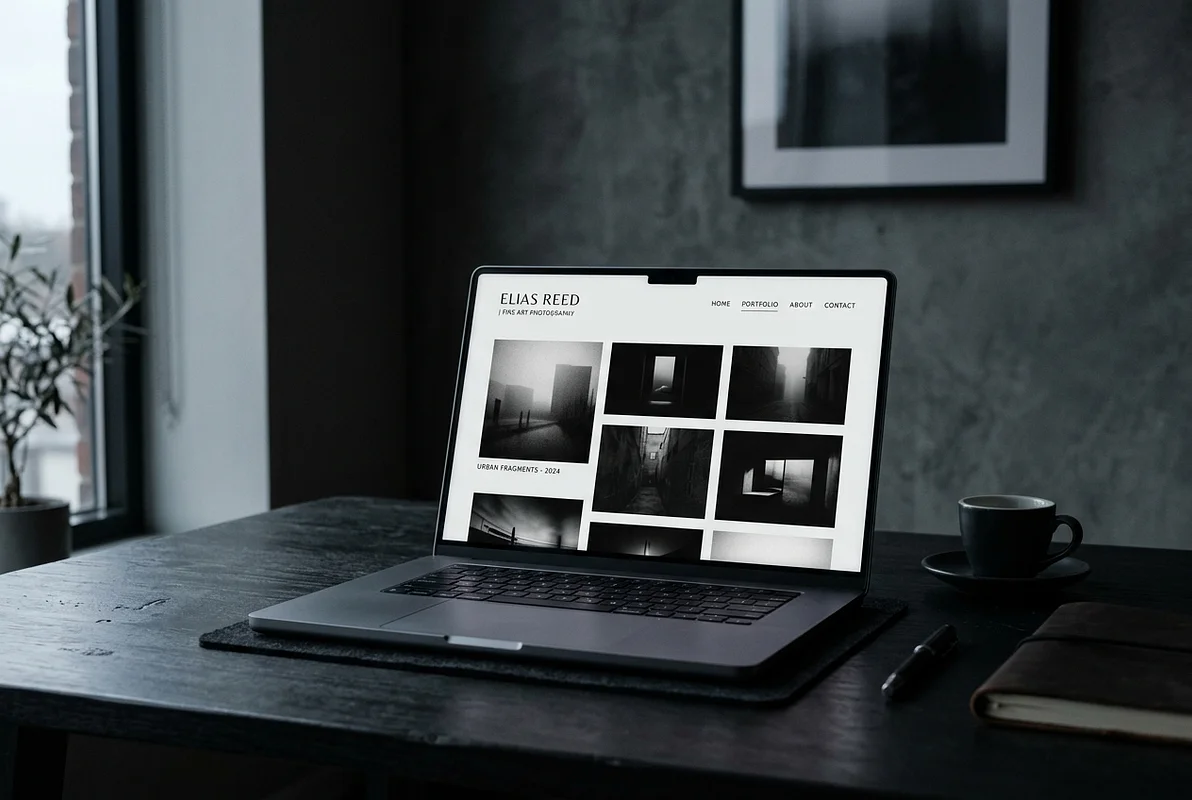
Your portfolio on Instagram is chronological, algorithmic, buried under months of content scrolling. Your website portfolio is curated. You choose which series appears first. You decide which work represents your practice. You control the narrative entirely. A museum's collection isn't displayed in reverse chronological order or algorithm order—it's curated with intention and hierarchy. Your website allows the same authority.
The Long-Term Asset
An Instagram account is borrowed. You own nothing. The platform owns your followers, your content, your data. If you're banned or if the platform collapses, everything vanishes. A website is an asset. The domain is yours. The content is yours. The visitor data is yours. In five years, your website will be worth more than it is today because it has aged—because Google trusts old, consistent sites and ranks them higher. Your Instagram account will be worth less if it hasn't grown exponentially, which most artists' accounts don't.
Artists who started websites in 2018 now tell the same story: organic search traffic has grown steadily every year. In 2018 they got three visitors monthly from Google. Today it's thirty or fifty, and the number rises every month. This compounds. By year five you've built a search presence that brings qualified traffic daily, costing you nothing in advertising. This is impossible on Instagram. Social media platforms don't compound in your favor—they capture you in the present tense, always.
Starting Costs Are Negligible
The barrier to entry is nearly zero. Domain registration: £8-12 yearly. Hosting: £5-15 monthly. Website builders like Squarespace, Cargo, or Artfond: £10-40 monthly depending on features. This is less than coffee budget for most people. The investment is absurdly small compared to the return. A single significant sale covers years of hosting costs.
The real investment is time: uploading work, writing descriptions, organizing portfolio. This is time you'd invest anyway, but a website forces you to do it properly, with thought and structure. On Instagram you upload and forget. On a website you must title works accurately, write meaningful descriptions, organize logically. This process itself—clarifying your practice, articulating what you make—has value beyond the website.
Multiple Channels, Aligned Purpose
Instagram and website aren't competing. They work in partnership. Instagram is momentum and real-time presence. Website is authority and permanence. A smart online strategy uses both: Instagram drives traffic to your website. Your website converts that traffic to inquiries or sales. Email collected through your website sustains the relationship. Each channel strengthens the others instead of fighting for attention.
The artist who thrives in 2026 operates multiple channels simultaneously but never forgets where the actual business happens—on their own site, under their own control, with complete information and clear purchasing process.