Most artists respond to exhibitions reactively. A friend invites them to a group show and they say yes without thinking. An open call appears and they apply without consideration. When exhibitions disappear, they panic. Any opportunity feels like success simply because it exists. Meanwhile, visibility becomes noise and their CV becomes a scattered list of unrelated shows. There's another approach entirely: strategic thinking. You don't take everything offered. You choose by criteria: audience quality, venue reputation, market positioning, geography. You plan one to three years ahead. Each exhibition is a deliberate step toward a goal, not random chance. You say no to attractive opportunities if they don't fit your plan. This is professional thinking, not amateur enthusiasm. The difference is stark: reactive artists have ten years of chaos. Strategic artists have three years of visible growth.
Different exhibition types matter differently
Solo exhibition defines careers more than anything else. The entire space is yours alone. Maximum impact and depth. Full expression of your practice in one unified context. Requirements: 30–50 finished works, a dedicated space of at least 50–100 m², and serious budget—£1,500–8,000 or more. Hardest to organise. Most valuable credential for your CV and market positioning.
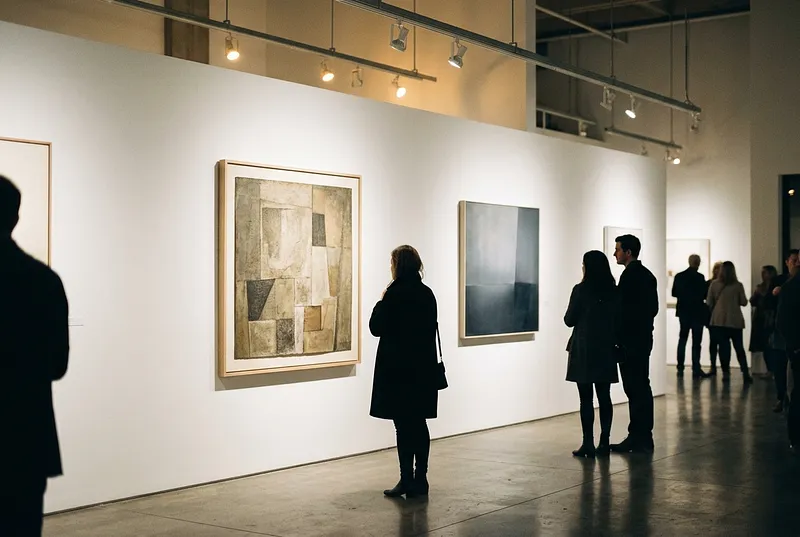
Group exhibition balances accessibility and visibility. Less effort required. Wider audience exposure. But context matters enormously: who are you exhibiting with? Stronger artists elevate you. Weaker artists dilute you. Your exhibition partners matter as much as venue choice.
Institutional exhibition is the holy grail. One line on your CV reading "Tate Modern" or "MoMA" changes everything. Collectors take you seriously immediately. Critics write reviews. Other museums invite you. This is verification at the highest institutional level.
Art fair is fast and market-oriented. People come ready to buy. Fairs are the best networking spaces: dealers, curators, collectors together for days. Fairs generate 30–50% of work sold versus 10–20% in traditional galleries. Costly: booth rental, logistics. But direct market access.
Pop-up and project space is flexible and experimental. Less traditional status effect. More creative freedom. Space to experiment with format, installation, sound. Often the first step in learning how to exhibit professionally.
Building a three-year strategic plan
Start with a single question: what do you want in three years? Not dreaming vaguely. Clear criteria. Break into international markets? Get your first museum solo? Secure major private collectors? Increase sales from 10 to 50 works annually? Secure gallery representation? Your answer determines everything: not just your exhibition list but what artist you need to become. Without a plan you react. With a plan you create.
Assess your resources honestly. Budget—£500, £3,000, £7,000? Time per week? Finished work available—10–15 for group shows, 30–50 for a solo? Fewer than 10 means months of production before you can exhibit seriously.
Realistic minimum for visibility: two to three exhibitions yearly. One solo or substantial group as the anchor. Two to three smaller shows for visibility. One art fair for market access. One abroad annually adds "international" to your CV. Museum curators notice this. Ambitious artists do four to six. More than that and you're stretched too thin, production suffers, and promotion suffers. Quality of exhibitions matters more than quantity.
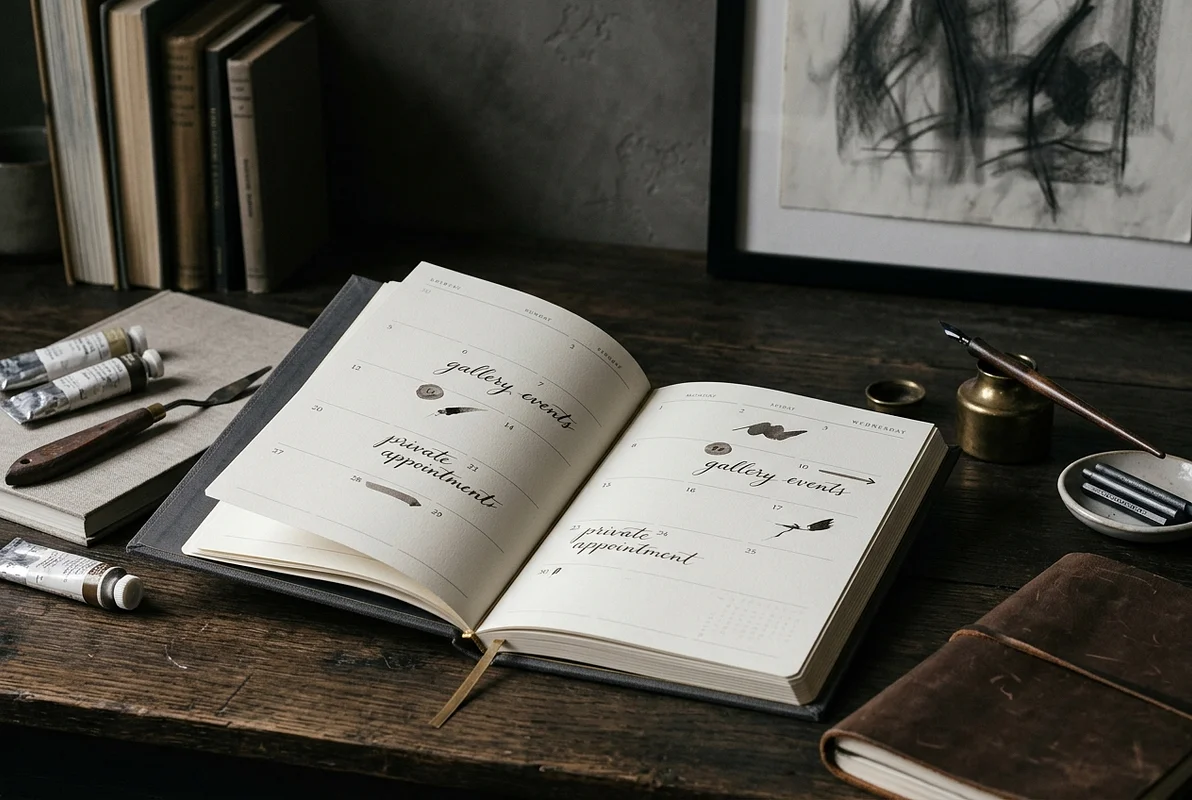
Create a deadline calendar. Institutional applications go in 12–18 months ahead—institutions plan far ahead. Exhibition confirmation happens 6–12 months before opening. Creating work and preparing: 3–6 months. Logistics and installation: 1–3 months. Promotion and press: 2–4 weeks before opening. A month before opening and you're too late. Rushed. Poorly publicised. No audiences or media coverage.
How exhibitions build price and reputation
Each exhibition is a CV line. But not all lines are equal. A museum show multiplies your price by 1.5–2x minimum. Work priced at £2,000 becomes £3,000–4,000 post-museum. A prestigious biennial multiplies further. A respected gallery show provides stable, consistent effects. Uncurated group shows in commercial spaces: minimal impact. Coffee shop show? That signals you're not professional yet. Collectors read CVs like maps of your career. Every stop tells them something. Choose strategically. One single strong, prestigious show yearly beats five weak, meaningless ones. In terms of market impact, one respected museum exhibition equals five lines from unknown commercial galleries. Quality of venue matters far more than quantity of shows.
Exhibition budgeting is critical
Exhibitions cost real money. Creating new work if required: £500–2,000 minimum. Framing or installation costs. Transport and insurance: £200–500 per work. Installation labour. Travel and accommodation if the gallery is distant. Catalogue printing. Wine and refreshments for the opening reception. A mid-size solo realistically costs £1,500–4,000 when you add everything up. A group show costs £400–1,000. Table everything in advance. Get specific quotes from framers, transport companies, printers. If the total doesn't fit your budget, find solutions: arts council grants, corporate sponsorship, cost-sharing with other artists. But you must know the exact figure before you commit.
Exhibition season is a real factor
The art world has rhythm—not snobbery, reality. September–November is the global high season. Major openings everywhere. Art world communication peaks. International media pays closest attention. Frieze, Art Basel, Paris Photo all happen then. An autumn solo fits the world's rhythm, attracts museum curators and collectors on the international circuit. January–March is the Northern Hemisphere intimate season—research-focused, when autumn deadlines close and biennial calls open. April–June: Southern European and American spring peak. July–August: Northern dead season—galleries closed, collectors on holiday—but powerful in the Southern Hemisphere and Australia. Also cheapest for logistics: specialists are less busy, prices drop.
Understand this rhythm deeply. Not all exhibitions have equal impact on your career trajectory. Choose ones fitting the global art calendar, not whatever happens to be available and open to submissions. That's the critical difference between relying on luck and building an actual career. Strategic planning transforms local visibility into something with international significance and real potential.