Professionalism doesn't come with a stamp
Three years ago, I met a painter who held a degree from one of the UK's most prestigious art academies, and on paper his credentials looked flawless: a strong portfolio, respected gallery exhibitions, reviews in serious publications. When I asked how many works he'd sold the previous year, he stiffened. "I'm a serious artist," he said. "I don't think about such things." Within two years, he'd quit making art entirely. Not because persistence wouldn't have helped. Not because his work lacked merit. But because brilliance in the studio doesn't survive incompetence everywhere else. You can be technically exceptional and still fail as a professional if you can't manage the unglamorous work that surrounds creation.
Professionalism isn't an official designation you earn and then possess forever. It's a daily practice: treating your artistic work like the business it actually is. Systematically. Consistently. With accountability to yourself and the people who might buy your work, show it, or write about it.
Why credentials and stamps guarantee almost nothing
Look at what external markers actually prove. A degree means you completed a course of study—nothing more. A solo exhibition means one curator loved your work at one moment in time. An official art registry means you filled out paperwork correctly. These credentials matter for getting in the door, but they're starting points, not endpoints.
What they absolutely do not guarantee is that you'll earn money from art, build a sustainable career, or succeed in the way you've imagined. More critically, they say nothing about the actual skills professionals develop: how you negotiate with collectors, photograph your work so it reads in digital format, keep sales records, track inventory, respond to emails promptly, deliver work on time, price fairly, or discuss money without flinching. Real professionalism is invisible—it's the administrative work nobody celebrates but everybody notices when it's missing.
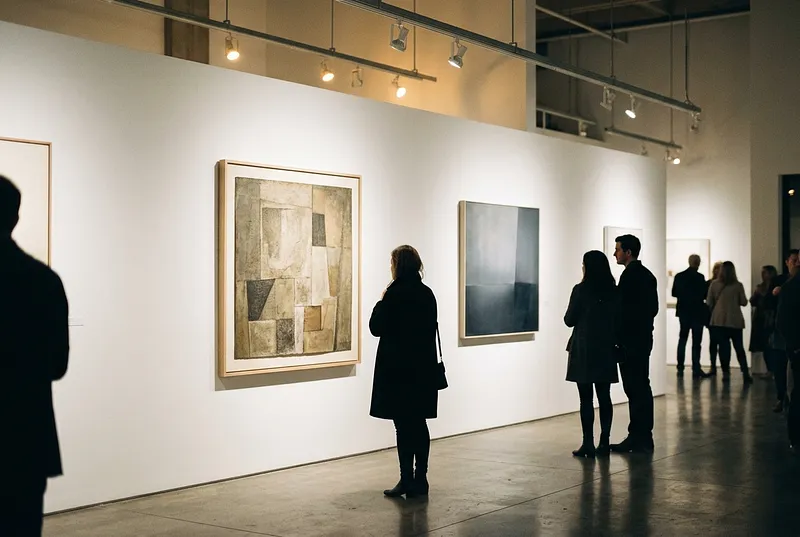
Walk into a gallery and you see finished paintings on white walls. What you don't see are the systems underneath: the artist who kept meticulous exhibition records, who photographed each work professionally, who could articulate their practice in conversation, who knew their market value and could name a price without embarrassment, who maintained insurance, who tracked sales tax, who followed up on leads. The glamorous work—the creation—gets celebrated. The professional work—everything else—gets taken for granted until it's absent.
How the art market fundamentally shifted
The 2010s operated on a different logic. The formula was almost quaint: create excellent work, show it in galleries, wait for discovery, become recognized. That path worked for perhaps a dozen artists per decade. For everyone else, it was hope dressed up as strategy.
The system has changed dramatically in the past decade, and this shift reshapes what professionalism now requires. Five changes matter most, and understanding them clarifies why professional practice matters more than credentials.
Geography dissolved as a barrier. A collector in Berlin discovers an artist in Melbourne through Instagram at 3 AM. They message. Months later, a work ships across the world. Geography used to divide the art world into local, regional, and international tiers. Now it's simply one variable among many. This is liberation and terror combined: your market isn't limited by location, but neither is your competition.
Gatekeepers proliferated—but so did alternatives. The single path to serious collectors used to run exclusively through galleries taking forty to sixty percent commission. This meant getting gallery representation was everything. Fail there, and your career essentially didn't exist. Now? Artists sell through personal websites, Instagram direct sales, online art fairs, auction platforms, and artist cooperatives. Galleries remain prestigious and important. They're simply no longer the only way to reach buyers with real money.
Information became mercilessly transparent. Auction prices for artists are searchable in seconds. Every gallery's exhibition history is documented online. Your competition's Instagram is public. Collectors can compare you against established artists globally, check market trends, see what similar work sells for, and assess your market positioning—all before they ever contact you. The information asymmetry that used to favor established artists evaporated. Collectors now arrive at your studio already educated about your price range.
The artist supply increased exponentially. In 2015, perhaps fifty thousand people globally called themselves professional artists and tried to make income from art. Today, it's likely five hundred thousand or more. Anyone with social media can position themselves as an artist. This doesn't devalue genuine practice—but it makes it harder to be noticed. Professionalism is now your primary differentiator. When a curator receives two hundred submissions for ten slots, it's the artists with perfect documentation, clear artist statements, professional photographs, and organized portfolios who stand out. The other two hundred don't get looked at twice.
Collectors shifted toward the human story. The era of the anonymous artist—the genius painting alone in a studio, mysterious and removed—has ended. Contemporary collectors want narrative: your artistic journey, your process, why these questions matter to you personally, how you work, your voice unfiltered. They want access beyond the gallery opening. This requires you to communicate directly, articulate your thinking, and build relationships with people interested in your work. It requires presence. Professional presence.
Three working models—and none is perfect
There's no single correct path through a professional art career. But three substantive models genuinely work if you approach them professionally.
Gallery representation. The gallery handles the marketing, the relationship-building with collectors, the sales logistics, and the credibility that comes from institutional endorsement. You paint and appear at openings. This sounds perfect until you realize it requires years of relationship-building to earn representation in a serious gallery, a portfolio absolutely bulletproof in its quality, and a surrender of forty to sixty percent of every sale. That percentage is substantial. For a five-thousand-dollar work, you clear two to three thousand. That cuts both ways though: the gallery handles buyers, which frees your time.
Complete independence. Everything falls to you: finding buyers, marketing your work, invoicing, bookkeeping, taxes, shipping, handling returns. You keep one hundred percent of the revenue. You also carry one hundred percent of the responsibility. Absolute creative freedom and absolute solitude. Most art school programs prepare you beautifully for making work and almost not at all for running a one-person business. The emotional weight can be crushing.
Hybrid practice. Most working artists live in this territory. Some work goes through galleries that believe in the work. Some sells direct through the website. Instagram brings followers. You submit to independent competitions and online fairs. You might take a few works to an art fair or participate in artist collectives. You balance institutional validation (galleries) with income independence (direct sales). It's messier than pure anything, but it's realistic and resilient. If one channel slows, the others remain.
Whichever model you choose—and you might shift between them over your career—you'll need identical core skills: the ability to present yourself clearly, discuss pricing without defensiveness, maintain organized records, build genuine relationships, photograph work professionally, and follow through on commitments. These don't change based on whether you work with galleries. They're the bedrock of professionalism itself.
One myth that sabotages careers repeatedly
One belief has damaged more artistic careers than market failure, bad luck, or lack of talent. It's this: a real artist doesn't think about money. Creates purely from internal necessity. Never markets or networks. Never negotiates. Never strategizes. Just makes work and waits beautifully. Everyone will eventually discover you if the work is good enough.
It's a lie. A romantic, comforting lie. A lie that benefits everyone who profits from artists' compliance—gallery owners, collectors, institutions, everyone except the artist. When you believe that thinking about money is corrupting, that professionalism is commercial compromise, that strategy destroys authenticity—you become easy to exploit. You undercharge. You accept bad terms. You remain invisible. And you justify it all as artistic integrity.
Think of it differently: respecting your work means thinking honestly about its value. Being visible isn't selling out—it's basic professional communication. Strategy doesn't kill spontaneity in the studio. It creates protective space for the spontaneity to actually flourish. Professional artists name their prices. They don't pretend that payment exists in some realm separate from creation. They understand that a collector's willingness to pay is simply respect made concrete.
From waiting to building
The fundamental shift separates artists into two camps: those waiting and those building.
Most artists wait. They make work. They hope someone discovers them. They imagine everything working out without their active involvement. They dream of the day someone finds them and everything changes. This fantasy comforts and paralyzes simultaneously.
Professional artists build. They make work. They show it. They speak about it. They reach out to people who might be interested. They build relationships. It works because the work goes in first, and then the artist puts in the professional work secondly. Nobody is obligated to find you. No algorithm prioritizes your Instagram because your work is good. Even the strongest portfolio sits completely silent until you actively make it heard.
Five markers of professional thinking
You respect your time. Not obsessive punctuality—the work itself. Don't spend three days perfecting a portfolio that could be complete in three hours. Every hour has actual cost: studio time lost, opportunity cost, money not earned. Value time accordingly.
You maintain records. Every exhibition. Every work sold. Every publication. No scrambling to remember what you exhibited three years ago. No vague sense of how much you earned last year. This isn't obsessive accounting—it's basic professional infrastructure. It's how you understand your career.
You can articulate your work. When a curator asks what your series investigates, you answer in three clear sentences. Not a philosophical monologue. Not vague mysticism. Clear, confident, professional speech about your own practice.
You know your value. Not philosophically in some abstract sense—concretely. What it costs to produce a work. Why you charge that price. How it sits relative to similar work in your market. What galleries typically pay for work at your level. This isn't character; it's preparation. You know before anyone asks.
You build professional infrastructure. A serious website. Properly lit, well-photographed images of your work. A current portfolio. Certificates of authenticity where appropriate. Professional contact information. This isn't luxury—it's foundation. An architect doesn't walk into a client meeting promising to email plans later. You don't either.
Professionalism doesn't erase your practice
Professional practice doesn't sterilize your work or your creative process. Work at night when you're most alive. Skip meals in the grip of focus. Sketch on napkins and coffee-stained papers. Your strangeness survives intact. The eccentricity that makes your art genuinely yours—it lives on.
What changes is everything surrounding the work: how you present yourself, how you communicate about your art, what you charge, how you document what you've done, the relationships you build, the records you keep. Creativity remains untouched. It stays private. What becomes professional is your interaction with the rest of the world.
Professionalism isn't the enemy of creativity. It's the foundation that allows your creativity to become sustainable, visible, and valued.
Right now, search your own name online. What appears in the first few results? That's your professional presence in the world. If it's a dormant Facebook page from years ago, some bad photos, or nothing at all—that's your starting point. You're not too late to build it. You're not trapped by what came before. You can start today with one small professional act: updating a single piece of documentation, taking proper photos, writing one version of your artist statement. Professionalism isn't a destination. It's a direction you move in, one small choice at a time.