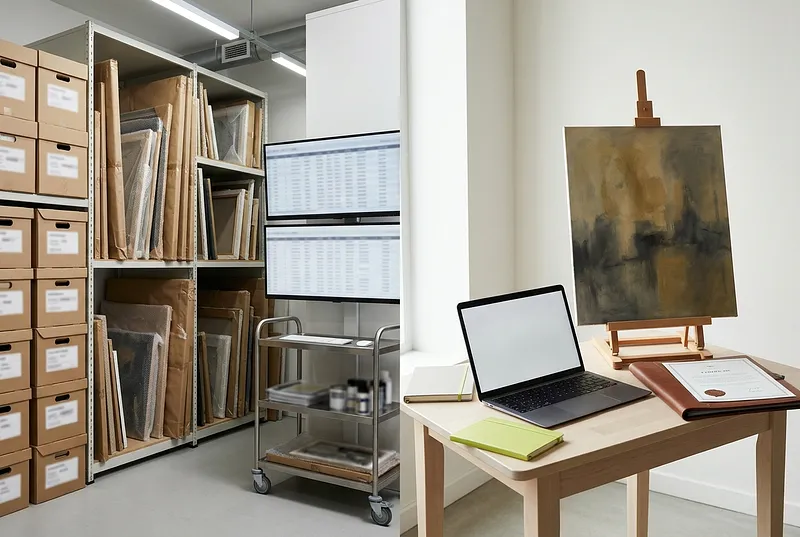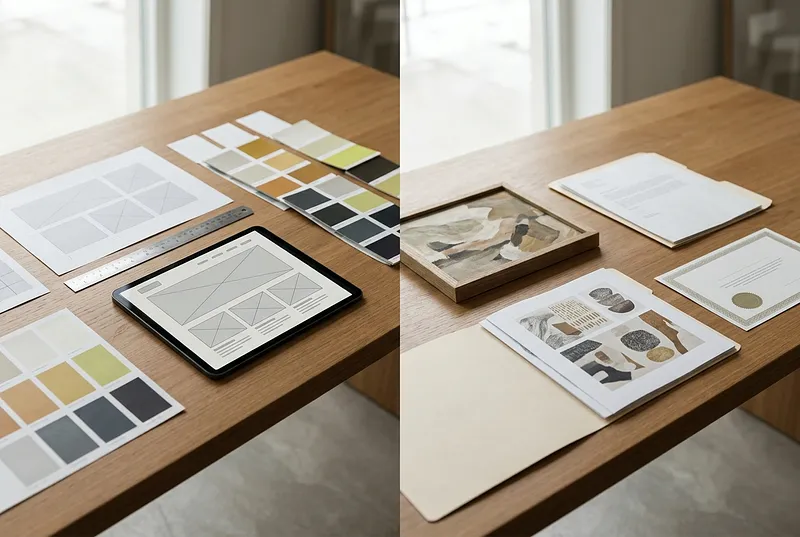
Sooner or later a buyer, a gallery, or an insurer will ask for a certificate of authenticity. It's a document in which the artist confirms in their own name: I made this artwork. Below is what it must contain, how a certificate that can be checked differs from a template found online, and how it works in ArtFond.
What a certificate must contain
- The artist's name, the way you sign your artworks.
- The title of the artwork and the year.
- Materials and medium.
- Dimensions.
- For editions, the number of the print and the edition size, for example 3 / 25.
- The certificate number or the artwork's registration number, so that it can be referred to.
- The date of issue.
- Your signature. By hand, on the printed sheet.
What doesn't belong in a certificate: a valuation (that's an appraiser's job), promises that the price will rise, and the words "guaranteed original" with no way of checking them.
How a template found online differs from a certificate that can be checked
A template is a sheet of paper. Anyone can print the same one with a different name on it. A certificate means something when, five years on, the buyer can check that it really was issued by you and that the details in it haven't been changed. That takes two things: a record of the issue, which you keep, and a way to compare the sheet with that record.
How it works in ArtFond
- The certificate is issued from the artwork's record. Name, title, year, materials, and dimensions come from the catalogue, so there's nothing to type again.
- Two languages on one sheet: English and one more that you choose from the seven.
- A registration number. Every artwork has a number in your catalogue, and it appears on the certificate.
- A QR code leads to a verification page on your site. It shows the details the certificate was issued with: artist, title, year, materials, dimensions, number, date.
- Changes are visible. If the artwork's record was edited after the certificate was issued, the verification page says so.
- Revoking. A certificate issued by mistake can be revoked, and the verification page will show that it's no longer valid (on the Unlimited plan).
- Editions. A separate certificate for each print, with its number.
- A provenance appendix, if you want one: where the artwork has been exhibited and who has owned it.
- A register. All the certificates you've issued are in one list in your account (on the Unlimited plan).
What an ArtFond certificate doesn't do
We say this plainly, because it matters:
- It isn't a digital signature. The certificate confirms that it was issued from your site on the date shown. We don't claim it can't be forged, but it can be checked against the record.
- It says nothing about who has the artwork now. It's a record of issue, not of ownership.
- It isn't an expert report or an export permit. Taking an artwork out of Ukraine requires a report from a state expert examination; ArtFond prepares the documents for that separately. Export rules differ by country.
Frequently asked questions
Is a certificate legally binding? It's your written statement of authorship. It carries the weight your signature carries. By itself it has no notarial or state status.
Do I need to sign the printed certificate? Yes. A signature by hand is what the buyer expects, and what sets your sheet apart from a printout.
What if I sold an artwork before I started issuing certificates? Issue one now: the date of issue will be today's, and that's honest. Send the buyer the PDF, or the sheet by post.
Can I issue a certificate for an artwork that isn't on my site? A certificate is issued from the artwork's record in the catalogue. You can add an artwork to the catalogue and not show it on the site.
How much does it cost? Issuing certificates and the verification page are included in every ArtFond plan: from €15 a month on annual billing, 14 days free, no card required. The register of issued certificates and revoking are on Unlimited.